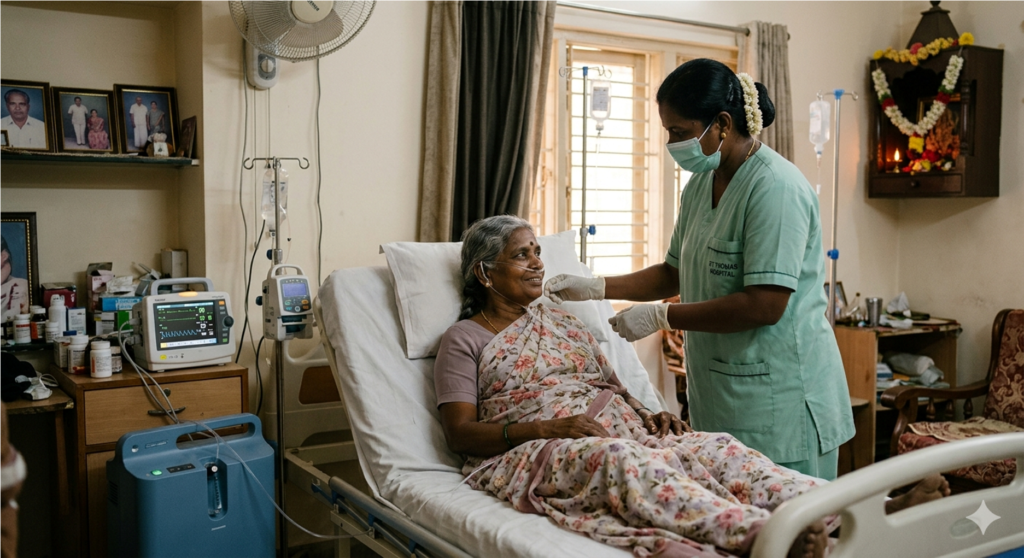
ICU recovery at home means a patient who has improved from a serious illness is discharged from ICU or hospital but still needs medical supervision and support at home.
A calm and comfortable home environment helps the patient recover faster both physically and mentally. Emotional support from family is also very important during this stage
Regular doctor follow-ups and proper safety measures must be followed to avoid complications. ICU recovery at home is a safe bridge between hospital care and normal life, helping patients regain strength step by step.
Even though the patient is not in a critical condition anymore, they may still need:
- Medicines on time
- Oxygen support
- Regular health monitoring
- Physical and emotional care
This stage acts like a bridge between hospital recovery and normal life.
Home Recovery
Recovering at home has many benefits compared to staying longer in the hospital:
- Patients feel more comfortable in their own home
- Family support improves emotional strength
- Less stress compared to hospital environment
- Reduces hospital expenses
- Frees hospital beds for critical patients
A peaceful environment helps patients recover faster both physically and mentally.
Care at Home After ICU
Even at home, patients still need proper medical care. This care is usually given by trained nurses, caregivers, or family members under doctor guidance.
Important care includes:
- Checking vital signs like blood pressure, pulse, and oxygen levels
- Giving prescribed medicines on time
- Providing oxygen support if needed
- Wound care after surgery or injury
- Helping with food, hydration, and nutrition
- Assisting with movement and basic activities
- Monitoring for any warning signs
Regular doctor check-ups are also very important during this stage.
Support System in Home Recovery
Support plays a big role in ICU recovery at home. The patient needs both medical and emotional support.
Family Support:
- Staying with the patient
- Helping in daily activities
- Giving emotional strength and motivation
- Ensuring medicines and care routines are followed
Medical Support:
- Home nurse visits
- Doctor consultations (in-person or online)
- Physiotherapy sessions if required
- Emergency guidance if condition changes
Together, these supports help the patient recover safely.
Safety Measures at Home
Safety is very important during home recovery after ICU. Some key precautions include:
- Keep emergency contact numbers ready
- Maintain a clean and hygienic environment
- Ensure medicines are not missed or overdosed
- Use medical equipment properly (oxygen, monitors if needed)
- Watch for warning signs like breathing difficulty, chest pain, or fever
- Do not ignore sudden changes in health
If any serious symptoms appear, immediate hospital care is necessary.
Common Patients Who Need Home ICU Recovery
ICU recovery at home is suitable for patients who:
- Recently discharged from ICU after improvement
- Recovering from major surgery
- Had severe infections or medical conditions
- Were on ventilator but now stable
- Still weak and need observation
These patients are not critical anymore but still need care to fully recover.
ICU Recovery at Home
ICU recovery at home means continuing treatment and healing at home after a patient improves from critical ICU care. It is a safe transition from hospital to home where the patient still needs monitoring and support. Care includes giving medicines on time, checking vital signs like blood pressure and oxygen level, and helping with daily activities.
Safety is very important, so hygiene, proper medication use, and emergency awareness must be followed. Home recovery helps reduce stress, lowers hospital cost, and improves comfort.
It is a bridge between ICU care and normal life, helping patients recover step by step in a peaceful environment.
Conclusion
ICU recovery at home is a safe and effective way to continue healing after serious illness. It combines medical care, family support, and a comfortable environment to help patients regain strength step by step.